
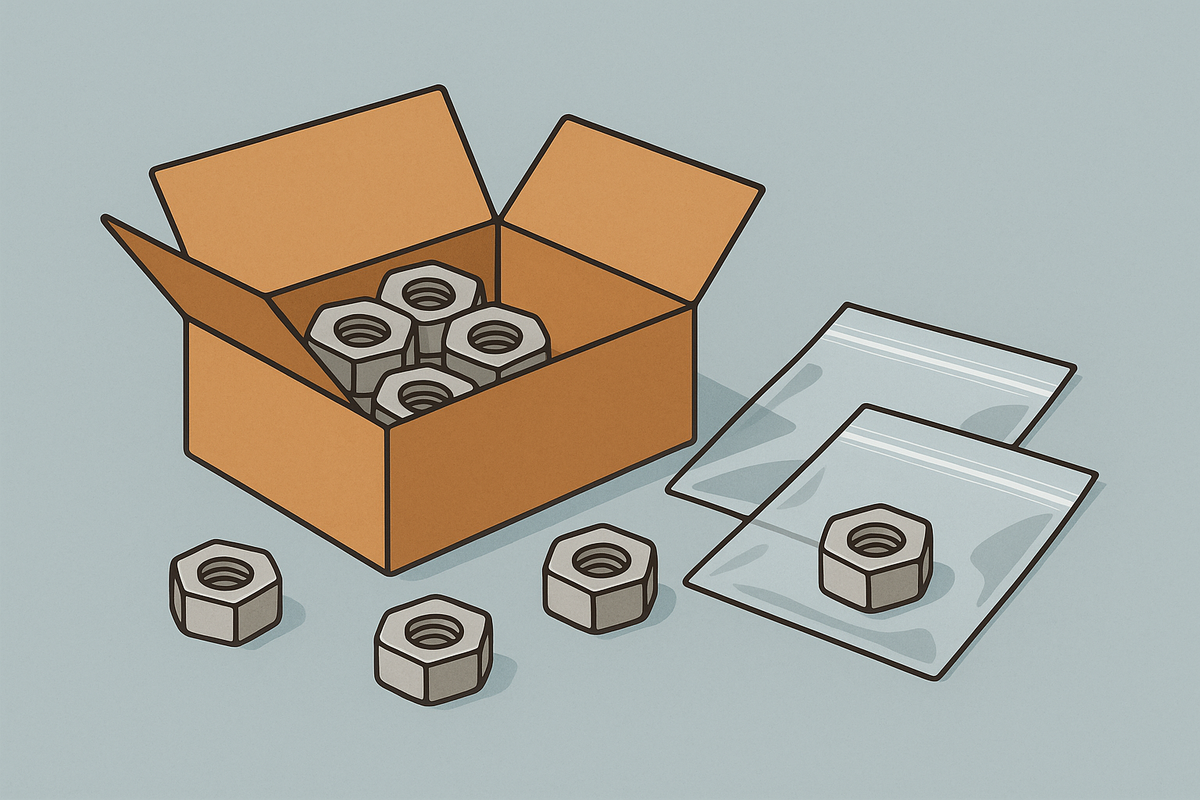
The standard three-container setup
If you’ve worked with MIL-STD-2073 packaging, you know the default setup:
- Unit container
- Intermediate container
- Exterior container
This three-step packaging process is designed to protect items during shipping, storage, and handling. But here’s the surprise that many don't know about - you don’t always need all three.
When the intermediate container is optional
Most contractors and even many packaging houses don’t realize that MIL-STD-2073 allows exceptions to the intermediate container requirement.
According to the standard, you can skip the intermediate container if the unit pack meets either of these criteria:
- Weighs more than 10 pounds, or
- Has a volume greater than 0.3750 cubic feet
Example: the 10+ pound item
Let’s say you’re packaging a heavy part that is over 10 pounds in its unit container. In this case, you can move directly from the unit container to exterior container and still meet MIL-STD-2073 requirements.
Less packing material, fewer steps, and often lower cost. All without sacrificing compliance to the standard.
Quick packaging checklist
When deciding whether to skip the intermediate container:
- Measure the weight of the unit pack.
- If over 10 lbs → Intermediate container not required.
- Measure the volume of the unit pack.
- If over 0.3750 cubic feet → Intermediate container not required.
- Confirm no special packaging instructions in the contract that will override this rule.
- Document your reasoning for compliance records.
Bottom line
Not every part needs that intermediate container. Over 10 pounds or over 0.3750 cubic feet in volume and you’re clear to skip it under MIL-STD-2073.
Knowing this rule saves time and materials, and keeps your operation efficient without risking a compliance hit.
Need help decoding MIL-STD-2073 for your contracts?
GovPacking.com is a valuable resource for understanding the codes of Mil-STD-2073. It helps you make packaging decisions faster by giving you confidence in your de-coding with clear data on requirements.


Member discussion: